Engineering
AI Fails Inside Engineering Teams for the Same Reason Most Rewrites Fail
AI Fails Inside Engineering Teams for the Same Reason Most Rewrites Fail
Everyone wants AI productivity gains right now.
Executives see headlines about “10x developers.” Managers hear vendors promising autonomous coding agents. Junior engineers are copy-pasting prompts into ChatGPT and shipping code faster than ever.
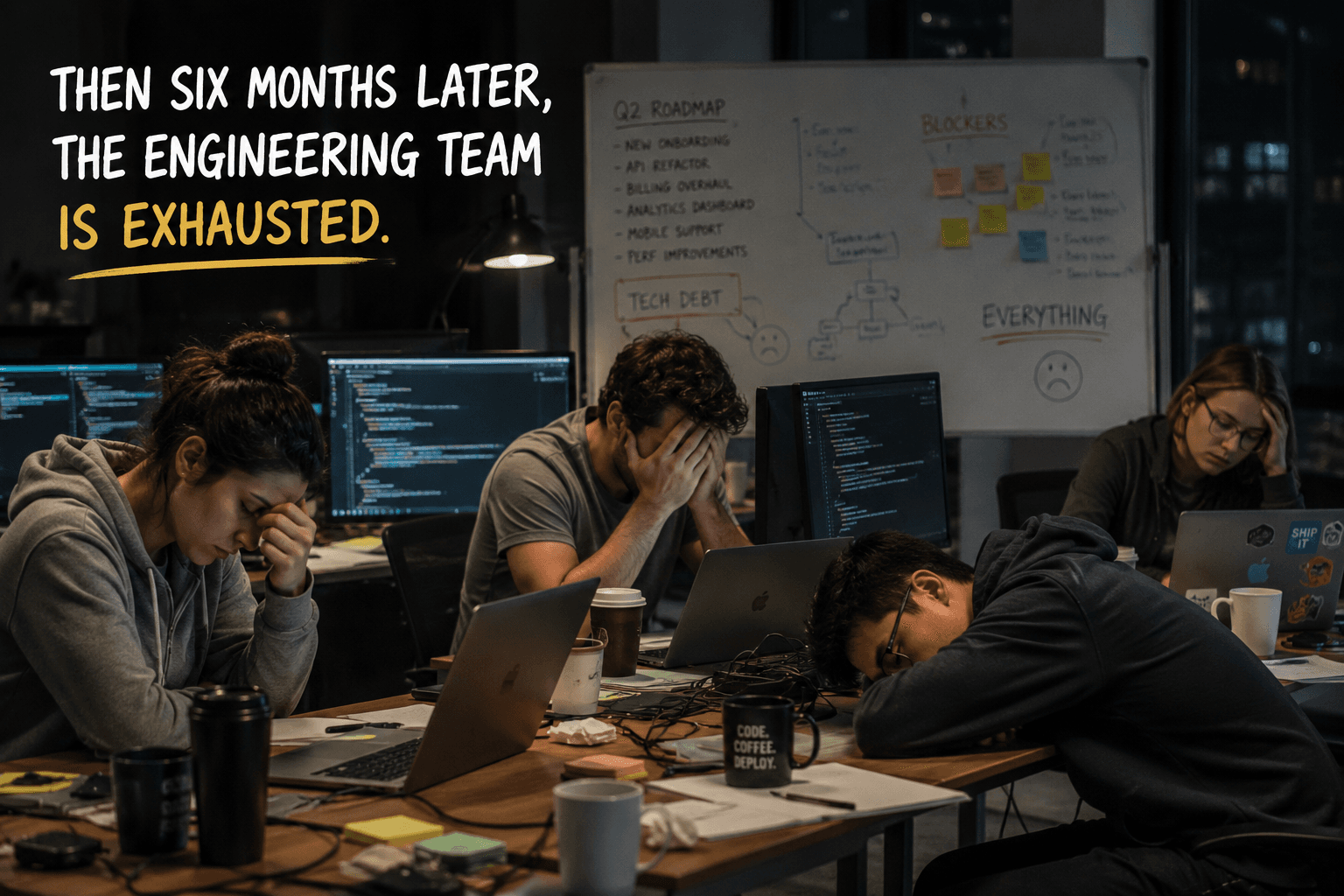
Then six months later, the engineering team is exhausted.
The codebase feels less consistent. Bugs are harder to diagnose. Nobody trusts generated code they didn't personally review. Senior engineers quietly start rewriting AI-generated work during late-night cleanup sessions. Velocity goes up on paper while operational drag increases underneath.
This is the part most AI evangelists skip.
The problem usually isn't the model.
The problem is that companies try to bolt AI onto engineering organizations without understanding how engineering organizations actually function.
AI adoption inside software teams is not a tooling problem. It's an organizational systems problem.
And if you've spent enough time inside production engineering environments, you start seeing the same failure patterns over and over.
Most engineering teams already have hidden coordination debt
A healthy engineering team is not just "people writing code."
It's shared conventions. Shared architectural assumptions. Shared operational knowledge. Shared instincts around risk.
The senior engineer who says "don't touch that service" is carrying years of production context in their head. The staff engineer reviewing a pull request often catches problems that were never documented anywhere.
AI systems don't naturally inherit that context.
They generate outputs based on probability, not organizational memory.
That distinction matters more than most companies realize.
When leadership deploys AI coding tools without accounting for organizational context, the models start producing technically valid code that violates invisible team assumptions.
That's when the problems begin.
Not catastrophic problems immediately.
Small ones.
Slightly inconsistent abstractions. Subtle violations of architectural boundaries. New dependencies nobody agreed on. Error handling patterns that don't match operational expectations. Infrastructure shortcuts that bypass existing deployment assumptions.
Individually, these look minor.
Collectively, they create entropy.
And entropy compounds faster than velocity metrics reveal.
AI works best when paired with deterministic engineering systems
This is why the strongest AI engineering organizations don't treat AI as autonomous magic.
They treat it as leverage inside controlled systems.
The companies succeeding with AI internally are usually doing some version of the same thing:
- Strong CI/CD enforcement
- Opinionated linting and formatting
- Deterministic workflows
- Clear architectural boundaries
- Aggressive code review culture
- Well-defined ownership models
- Automated evaluation pipelines
- Internal tooling that constrains behavior
The AI is not replacing engineering discipline.
It is amplifying existing engineering discipline.
Weak engineering organizations often expect AI to compensate for process problems.
Strong engineering organizations use AI to accelerate systems that were already functioning correctly.
That distinction is enormous.
The best AI integrations usually start with boring problems
This surprises people.
Companies often want to jump directly into autonomous agents, self-writing systems, or fully AI-generated products.
Meanwhile, the highest ROI internal AI projects are usually much less glamorous.
Things like:
- Reducing support ticket triage time
- Improving internal search
- Automating repetitive documentation work
- Assisting incident response
- Generating infrastructure boilerplate
- Summarizing operational logs
- Accelerating QA workflows
- Extracting structured data from messy systems
Why?
Because these workflows already exist.
They already have measurable inputs and outputs.
You can evaluate whether the AI is helping or hurting.
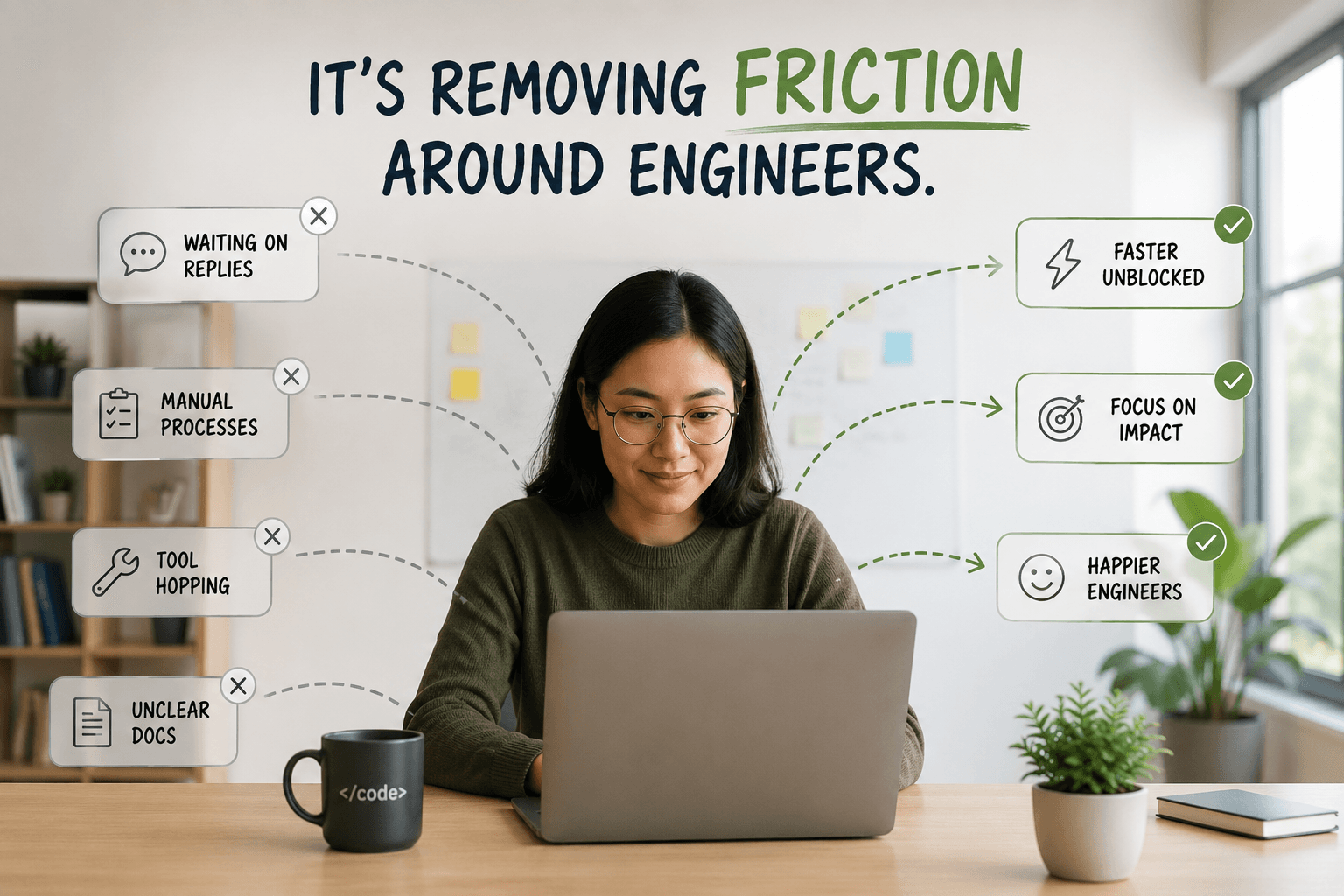
The fastest path to successful AI adoption is usually not replacing engineers.
It's removing friction around engineers.
Senior engineers matter more after AI adoption, not less
This is another thing companies get backwards.
AI dramatically increases the importance of senior engineering talent.
Because once code generation becomes cheap, judgment becomes the bottleneck.
The hard part is no longer producing syntax.
The hard part is:
- knowing what should exist
- understanding system tradeoffs
- predicting operational failures
- maintaining architectural consistency
- evaluating long-term maintenance burden
- designing safe deployment workflows
- understanding scaling implications
- balancing velocity against reliability
Those are senior engineering skills.
AI compresses implementation time. It does not compress experience.
In many organizations, AI actually widens the gap between strong engineers and weak ones.
The strong engineers use AI as force multiplication. The weak engineers use AI to produce larger quantities of fragile systems faster.
The companies getting AI right are treating it like infrastructure
This is where my background tends to become valuable.
I've spent most of my career in production engineering environments where reliability mattered more than demos.
Insurance systems. High-scale backend infrastructure. Workflow automation. Distributed systems. Production ETL pipelines. Computer vision systems operating against messy real-world inputs.
In those environments, "mostly works" is failure.
That mindset translates extremely well into practical AI adoption.
Because production AI is not about prompts.
It's about orchestration. Evaluation. Guardrails. Observability. Workflow design. Failure recovery. Operational predictability.
The engineering teams succeeding with AI today are the ones treating models like another unreliable distributed system component that needs constraints, monitoring, and operational controls.
Not magic.
Infrastructure.
Hiring managers are starting to realize there's a difference between "AI users" and AI engineers
Right now the market is flooded with people claiming AI expertise because they can use ChatGPT or stitch together wrappers around APIs.
That's not the same thing as integrating AI into production engineering organizations responsibly.
Real-world AI integration requires understanding:
- existing engineering culture
- deployment pipelines
- security boundaries
- compliance constraints
- operational risk
- observability systems
- infrastructure economics
- human workflows
- long-term maintenance realities
That's why companies are increasingly looking for engineers who can bridge both worlds:
People who understand modern AI capabilities and understand how real engineering teams operate under production pressure.
Because the hardest AI problem most companies have right now is not model capability.
It's organizational integration.
AI is becoming part of the engineering stack whether companies are ready or not
This shift is already happening.
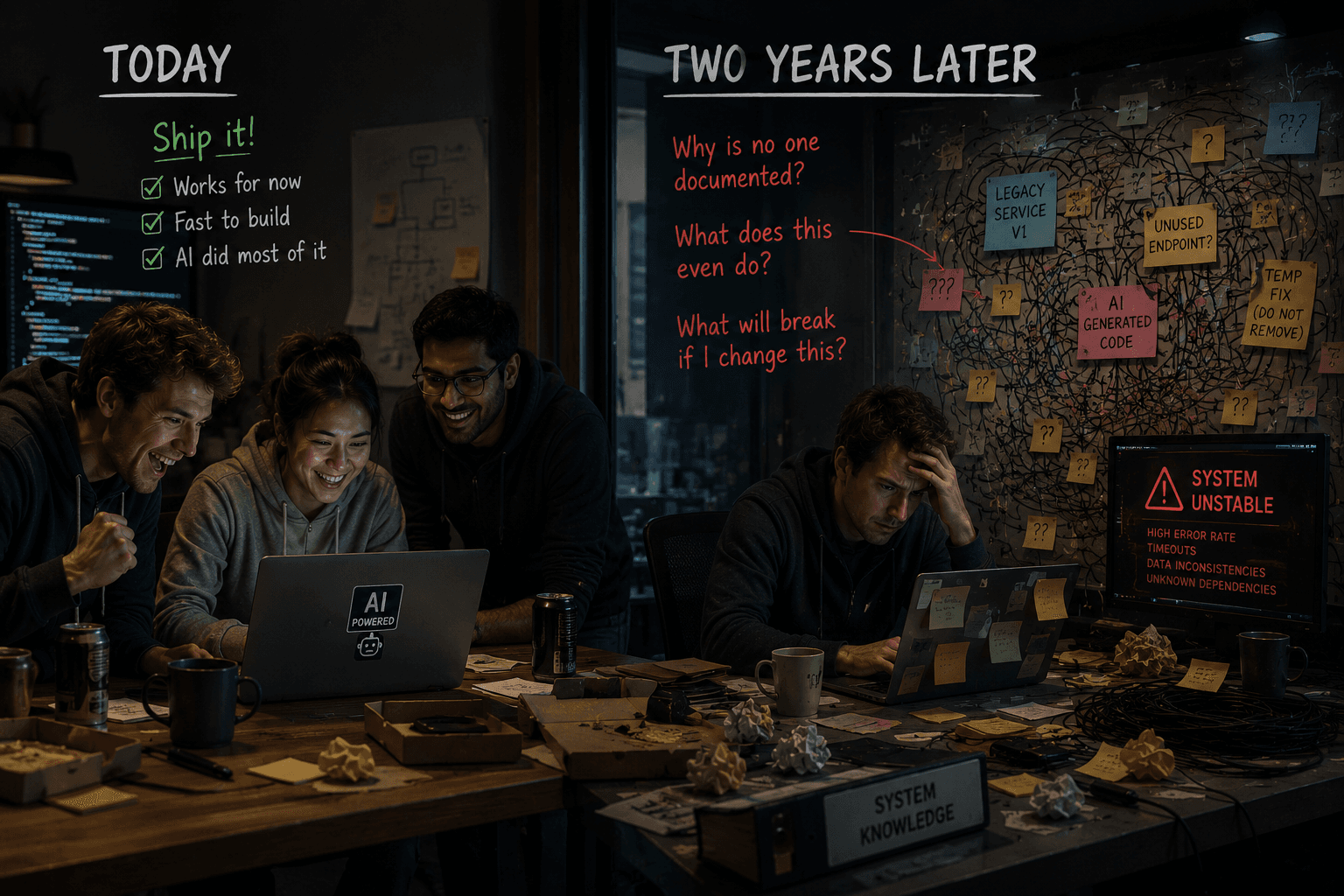
Some organizations are adopting AI carefully and building operational leverage from it.
Others are creating future maintenance disasters they won't fully understand for another two years.
The difference usually comes down to whether experienced engineers were involved in the adoption process early enough.
AI absolutely changes how software gets built.
But the companies that win are not abandoning engineering discipline.
They're combining modern AI capabilities with mature engineering systems and experienced technical leadership.
That combination is where the real leverage is.
I build these kinds of systems for clients too
Autonomous AI pipelines, custom automation, production ML. If your business has a process that's eating time, I can probably automate it.